



Acrylic is one of the most versatile materials in signage, retail, architecture, and industrial design. Its clarity, strength, and adaptability make it a reliable alternative to glass, but safety and compliance must always come first. Understanding the rules, standards, and testing that govern the fabrication of acrylic is essential as its use in public and commercial settings increases. For Denny Plastics, quality means not only precision but also responsibility, ensuring every product meets strict safety and material standards.
Fire safety and building regulations
Fire performance plays a crucial role when using acrylic in public spaces, exhibitions, or shopfitting. Acrylic is a thermoplastic, which means it can soften or ignite if exposed to heat, so the correct grade and installation method are vital.
Fire-retardant acrylics are available that meet Class 1 (BS 476 Part 7) surface spread of flame ratings, suitable for indoor displays and wall panels. Compliance with building regulations and local fire codes is required for any installation involving heat or electrical lighting. Poor ventilation or proximity to heat sources can affect safety, so expert guidance during design and fitting is crucial.
Denny Plastics closely collaborates with clients to select the appropriate material for each project. This includes choosing fire-rated sheets, advising on spacing and mounting, and ensuring finishes such as flame polishing do not alter performance.
Structural safety and load bearing
Acrylic is up to 17 times stronger than glass, but its structural safety depends on thickness, mounting, and temperature exposure. When used for glazing, partitions, or protective screens, it must comply with standards like BS EN 13501 for material performance and BS 6262 for glazing.
Improper fixing or under-spec thickness can lead to stress cracks or bending. Denny Plastics uses precision machining and expert bonding to maintain integrity, ensuring each panel or enclosure is built to last. For complex or heavy applications, additional supports or metal frames are recommended for added load distribution.
Material safety and environmental responsibility
Acrylic, or PMMA, is non-toxic once cured, which makes it suitable for display, food contact, and healthcare use. However, correct handling during fabrication is essential to meet UK workplace safety regulations.
At Denny Plastics, all adhesives and bonding agents are used under COSHH controls, with extraction systems that maintain safe air quality. The company only sources REACH-compliant materials that are free from harmful additives.
UV stability is another safety and longevity factor. Outdoor or high-light installations must use UV-stabilised acrylic to prevent yellowing or brittleness. Many modern sheets are also recyclable, helping to meet environmental and sustainability goals.
Certification, warranties and traceability
Reliable acrylic fabrication depends on traceable, certified materials. Denny Plastics works exclusively with trusted brands such as Perspex and Lucite, which provide full documentation confirming fire, mechanical, and UV performance.
Key certifications include:
- BS EN ISO 9001 for quality management
- RoHS and REACH compliance for chemical safety
- BS 476 or EN 13501 for fire performance
Each sheet should carry a batch code or identification number for traceability. This ensures that the product supplied is the same material that was tested and certified, protecting both fabricator and client.
Labelling and transparency
Proper labelling also helps differentiate between plastics like acrylic, PETG, and polycarbonate, which may have different impact and fire properties. Accurate documentation is particularly important for museums, exhibitions, and food service projects where hygiene or compliance checks are routine.
Denny Plastics provides clear material information with every order so clients can present compliance data to insurers, local authorities, or safety inspectors.
Fabrication methods and compliance
Even the best materials can lose their compliance rating if they are handled incorrectly. Bonding or polishing methods must preserve the mechanical and optical integrity of acrylic.
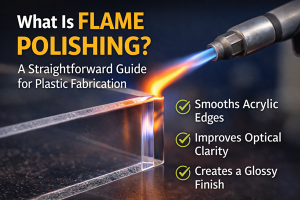
Denny Plastics uses techniques such as UV bonding, diffusion bonding, and flame polishing, each chosen to match the project’s technical needs. For example, UV bonding provides optical clarity for display cases, while solvent bonding is used for durable industrial parts.
In illuminated displays, wiring and heat management are carefully planned to prevent overheating or distortion. Attention to detail at every stage ensures long-term safety and appearance.
Meeting standards across industries
Acrylic fabrication standards vary depending on use. Retail and architectural applications must follow HSE and building safety requirements, while artistic and exhibition projects may follow internal or insurer guidelines. Denny Plastics frequently collaborates with designers, engineers, and installers to ensure that all creative ambitions are met safely and legally.
Acrylic is also used in environments where people interact directly with the material, such as counters, partitions, and exhibitions. In these cases, smooth edges, stable fixing, and structural testing are part of every build process.
Why safety standards protect everyone
Following regulation benefits everyone involved. Clients gain confidence in the durability and compliance of their installations, while fabricators uphold their professional reputation. Safety standards also protect the public, prevent product failure, and extend lifespan; all of which reduce long-term cost and liability.
Denny Plastics takes this seriously. Each fabrication project is carried out with full consideration of safety, performance, and design excellence, ensuring the final result is as reliable as it is visually impressive.
Contact Denny Plastics
If you require expert guidance on safe, compliant acrylic fabrication, contact Denny Plastics today. The team can advise on fire-rated materials, structural requirements, and certification for projects of all scales.