SPEAK TO THE EXPERTS

  • phone-icon
  • 020 8964 9368

SEND US AN EMAIL

  • mail-icon
  • sales@dennyplastics.co.uk

Blog

Categories
blogpost

Why Acrylic Is Replacing Glass in Commercial Interiors

Commercial interiors increasingly use acrylic instead of traditional glass. Retailers, offices, hospitality venues and public buildings are moving towards acrylic because it offers practical and visual advantages without compromising appearance.

Acrylic Looks Like Glass Without the Drawbacks

Modern acrylic provides excellent optical clarity and a polished finish that closely resembles glass.

However, acrylic is:

  • Much lighter
  • Easier to fabricate
  • More impact resistant
  • Simpler to install

This makes it ideal for commercial projects where safety, weight and flexibility matter.

Reduced Risk of Breakage

Glass can shatter under impact, creating safety risks in busy environments.

Acrylic is far more resistant to breakage, making it suitable for:

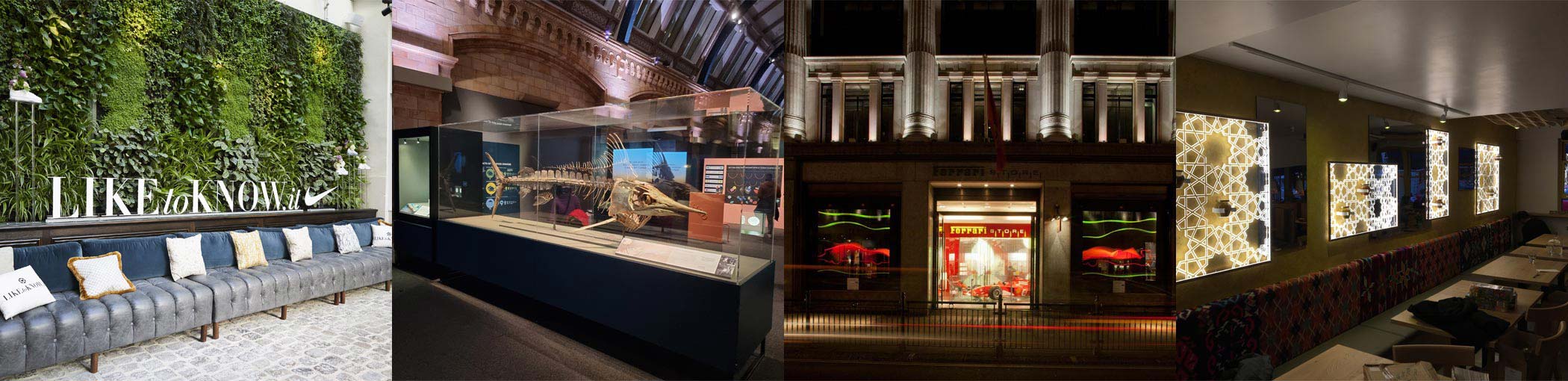
  • Retail displays
  • Protective barriers
  • Public-facing counters
  • Wall panels
  • Interior partitions

This reduces maintenance costs and improves safety for staff and customers.

Easier Fabrication for Bespoke Designs

Glass can be difficult and expensive to customise. Acrylic fabrication allows far greater flexibility during manufacturing.

Acrylic can be:

  • Laser cut
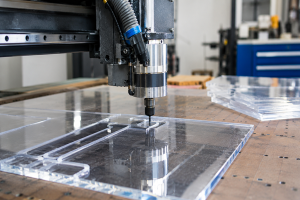
  • CNC machined
  • Bent with heat
  • Polished
  • Printed
  • Bonded into complex shapes

This allows designers and businesses to create custom solutions that would be difficult or expensive using glass.

Lower Installation Costs

Because acrylic weighs significantly less than glass, installation is often faster and more cost-effective.

Lighter materials can reduce:

  • Transport costs
  • Structural support requirements
  • Labour time
  • Installation complexity

This is particularly useful for:

  • Suspended displays
  • Wall-mounted features
  • Exhibition systems
  • Large retail installations

Better for Retail and Display Applications

Retail environments need materials that look professional while handling daily wear.

Acrylic performs well because it:

  • Maintains clarity
  • Can be polished if scratched
  • Allows custom branding
  • Supports illuminated displays
  • Creates cleaner visual merchandising

For this reason, acrylic is widely used across:

  • Point of sale displays
  • Cosmetic counters
  • Luxury retail displays
  • Exhibition stands
  • Product showcases

A Modern Material for Commercial Spaces

Businesses increasingly choose acrylic because it combines appearance, durability and fabrication flexibility.

For commercial interiors requiring bespoke displays, signage or protective solutions, acrylic provides a practical alternative to glass without sacrificing presentation quality.
Categories
blogpost

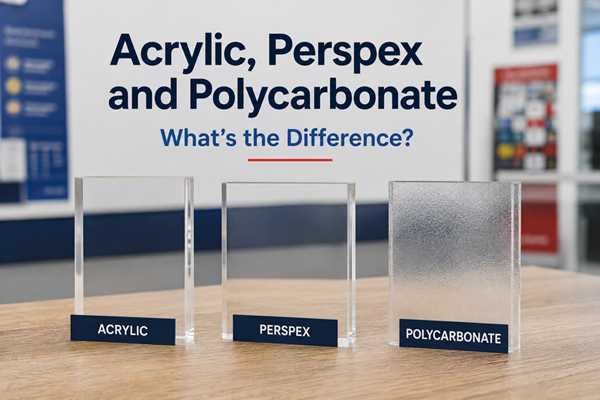
What Is the Difference Between Acrylic, Perspex and Polycarbonate?

When choosing plastic materials for fabrication, many businesses compare acrylic, Perspex and polycarbonate. Although these materials can appear similar, they perform very differently depending on the application.

Understanding the strengths of each material helps prevent costly mistakes and ensures the finished product performs properly over time.

What Is Acrylic?

Acrylic is a transparent plastic known for its optical clarity, weather resistance and smooth finish. It is widely used for retail displays, signage, machine covers and protective barriers.

Many people use the word “Perspex” when referring to acrylic. Perspex is actually a brand name for acrylic sheeting, similar to how Hoover became associated with vacuum cleaners.

Main benefits of acrylic:

  • Excellent clarity
  • Lightweight compared with glass
  • UV and weather resistant
  • Easy to fabricate and polish
  • Available in many colours and finishes

Acrylic is often chosen for:

  • Shop displays
  • Wall signage
  • Exhibition stands
  • Protective screens
  • Point of sale displays

What Is Polycarbonate?

Polycarbonate is a much tougher plastic designed for impact resistance. It is commonly used where safety and durability matter more than optical perfection.

Although polycarbonate is less scratch-resistant than acrylic, it is extremely difficult to break.

Main benefits of polycarbonate:

  • High impact resistance
  • Stronger than acrylic
  • Good heat resistance
  • Suitable for industrial environments
  • Used in safety applications

Polycarbonate is commonly used for:

  • Machine guards
  • Safety glazing
  • Protective covers
  • Industrial shields
  • Security panels

Acrylic vs Polycarbonate: Which Is Better?

The right material depends entirely on the project.

FeatureAcrylicPolycarbonate
Optical clarityExcellentVery good
Impact resistanceModerateExtremely high
Scratch resistanceBetterLower
CostLowerHigher
Fabrication finishExcellentGood
Outdoor useExcellentGood

For retail displays and signage, acrylic is normally the better choice because of its clean finish and clarity.

For industrial environments and protective applications, polycarbonate is often preferred due to its strength.

Why Businesses Choose Bespoke Plastic Fabrication

Off-the-shelf plastic products rarely fit exact commercial requirements. Bespoke fabrication allows businesses to choose:

  • Exact dimensions
  • Material thickness
  • Cut-outs and drilling
  • Polished edges
  • Branding and printing
  • Specialist finishes

Custom fabrication also improves durability and presentation, particularly in retail and commercial settings.

Choosing the Right Plastic for Your Project

Selecting the wrong material can lead to cracking, discolouration or premature failure. A fabrication specialist can recommend the correct plastic based on:

  • Indoor or outdoor use
  • Exposure to heat
  • Safety requirements
  • Weight limits
  • Appearance
  • Budget

Working with an experienced UK plastic fabrication company ensures the finished product performs as intended and maintains a professional appearance long term.