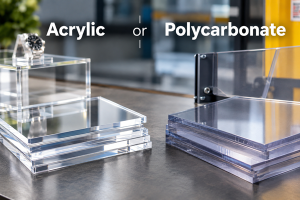


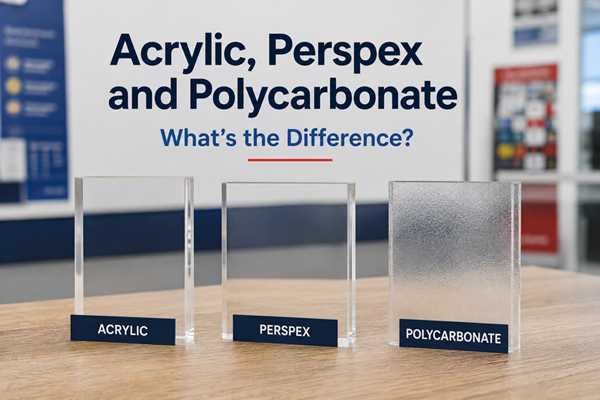
When choosing plastic materials for fabrication, many businesses compare acrylic, Perspex and polycarbonate. Although these materials can appear similar, they perform very differently depending on the application.
Understanding the strengths of each material helps prevent costly mistakes and ensures the finished product performs properly over time.
What Is Acrylic?
Acrylic is a transparent plastic known for its optical clarity, weather resistance and smooth finish. It is widely used for retail displays, signage, machine covers and protective barriers.
Many people use the word “Perspex” when referring to acrylic. Perspex is actually a brand name for acrylic sheeting, similar to how Hoover became associated with vacuum cleaners.
Main benefits of acrylic:
- Excellent clarity
- Lightweight compared with glass
- UV and weather resistant
- Easy to fabricate and polish
- Available in many colours and finishes
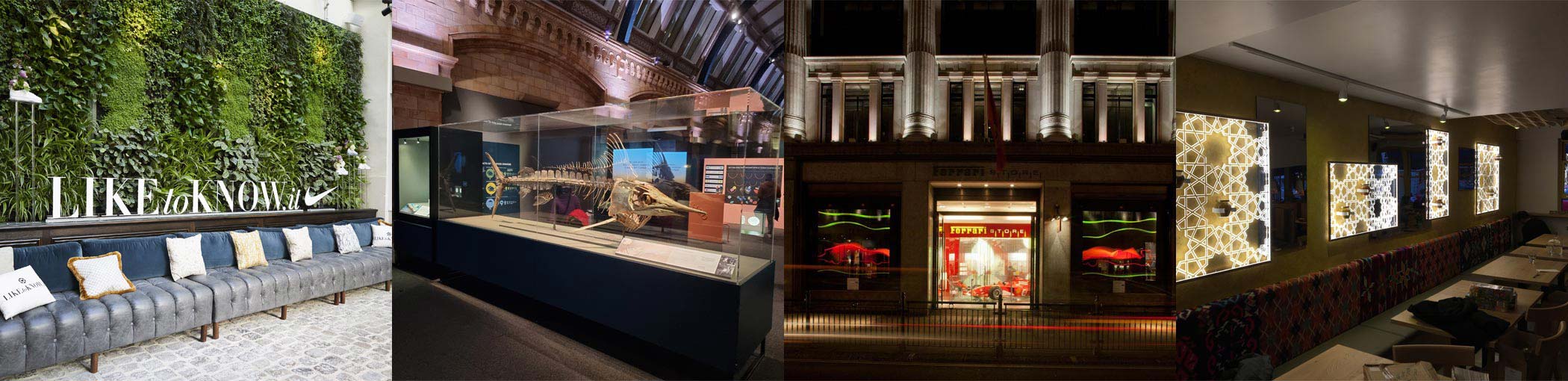
Acrylic is often chosen for:
- Shop displays
- Wall signage
- Exhibition stands
- Protective screens
- Point of sale displays
What Is Polycarbonate?
Polycarbonate is a much tougher plastic designed for impact resistance. It is commonly used where safety and durability matter more than optical perfection.
Although polycarbonate is less scratch-resistant than acrylic, it is extremely difficult to break.
Main benefits of polycarbonate:
- High impact resistance
- Stronger than acrylic
- Good heat resistance
- Suitable for industrial environments
- Used in safety applications
Polycarbonate is commonly used for:
- Machine guards
- Safety glazing
- Protective covers
- Industrial shields
- Security panels
Acrylic vs Polycarbonate: Which Is Better?
The right material depends entirely on the project.
| Feature | Acrylic | Polycarbonate |
| Optical clarity | Excellent | Very good |
| Impact resistance | Moderate | Extremely high |
| Scratch resistance | Better | Lower |
| Cost | Lower | Higher |
| Fabrication finish | Excellent | Good |
| Outdoor use | Excellent | Good |
For retail displays and signage, acrylic is normally the better choice because of its clean finish and clarity.
For industrial environments and protective applications, polycarbonate is often preferred due to its strength.
Why Businesses Choose Bespoke Plastic Fabrication
Off-the-shelf plastic products rarely fit exact commercial requirements. Bespoke fabrication allows businesses to choose:
- Exact dimensions
- Material thickness
- Cut-outs and drilling
- Polished edges
- Branding and printing
- Specialist finishes
Custom fabrication also improves durability and presentation, particularly in retail and commercial settings.
Choosing the Right Plastic for Your Project
Selecting the wrong material can lead to cracking, discolouration or premature failure. A fabrication specialist can recommend the correct plastic based on:
- Indoor or outdoor use
- Exposure to heat
- Safety requirements
- Weight limits
- Appearance
- Budget
Working with an experienced UK plastic fabrication company ensures the finished product performs as intended and maintains a professional appearance long term.