

Exhibition projects rarely unfold exactly as planned.
A product specification changes days before installation. Branding approvals arrive late. Packaging dimensions shift after manufacturing. Venue requirements are revised after stand production has already started. Sometimes display panels arrive damaged while equipment is already in transit to the exhibition hall.
When deadlines compress, exhibitors and stand builders are left balancing two competing pressures at the same time: speed and presentation quality.
That challenge is one reason rapid acrylic prototyping and fast-turnaround exhibition fabrication are becoming increasingly important across modern trade show production. Acrylic display systems can usually be changed, made again, adjusted, or swapped out much quicker than heavier traditional structures, which helps exhibition teams handle last-minute changes without having to rebuild entire stands from the ground up.
For businesses operating within competitive exhibition sectors such as technology, automotive, retail, cosmetics, and consumer electronics, that flexibility is no longer simply convenient. It is becoming operationally valuable.
Where exhibition timelines usually break down
Most exhibition stands begin with a relatively controlled production schedule.
Creative concepts are approved, technical drawings are finalised; fabrication timelines are allocated, and installation planning begins weeks or months before the event itself.
The pressure usually appears later.
In practice, exhibition environments involve multiple moving parts operating simultaneously across different suppliers, departments, and approval stages. A delay in one area can quickly affect everything else connected to the stand build.
Common examples include revised product launches, late artwork approvals, updated marketing campaigns, shipping delays, altered electrical layouts, or exhibition organisers changing venue specifications after production has already begun.
These problems are especially common at large international trade shows where exhibitors coordinate logistics across multiple countries and suppliers simultaneously.
A cosmetics brand preparing for a European retail exhibition, for example, may finalise product packaging only days before printed graphics and illuminated display housings are scheduled for production. If the dimensions change even slightly, display structures often need modification immediately to avoid installation problems on-site.
Historically, these kinds of changes could create major disruption.
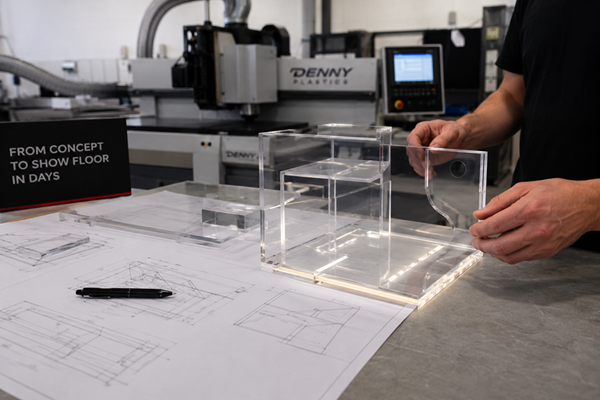
Today, rapid acrylic fabrication enables more efficient adjustments to many exhibition components.
Why acrylic fabrication suits rapid exhibition changes
Part of acrylic’s advantage comes from how adaptable the material is during manufacturing.
Modern acrylic exhibition displays can be precision-cut, engraved, edge-finished, illuminated, and assembled with relatively quick turnaround compared with heavier structural fabrication methods. That makes acrylic particularly useful when exhibition components need adjustment late in the production process.
This flexibility matters because exhibition timelines increasingly operate under compressed commercial pressure.
Brands now launch products faster. Marketing campaigns change more frequently. Exhibition visuals are updated closer to live event dates. In some industries, product announcements are intentionally delayed until the final stages before public release.
As a result, exhibition stand production increasingly depends on fabrication systems capable of responding quickly without reducing visual consistency.
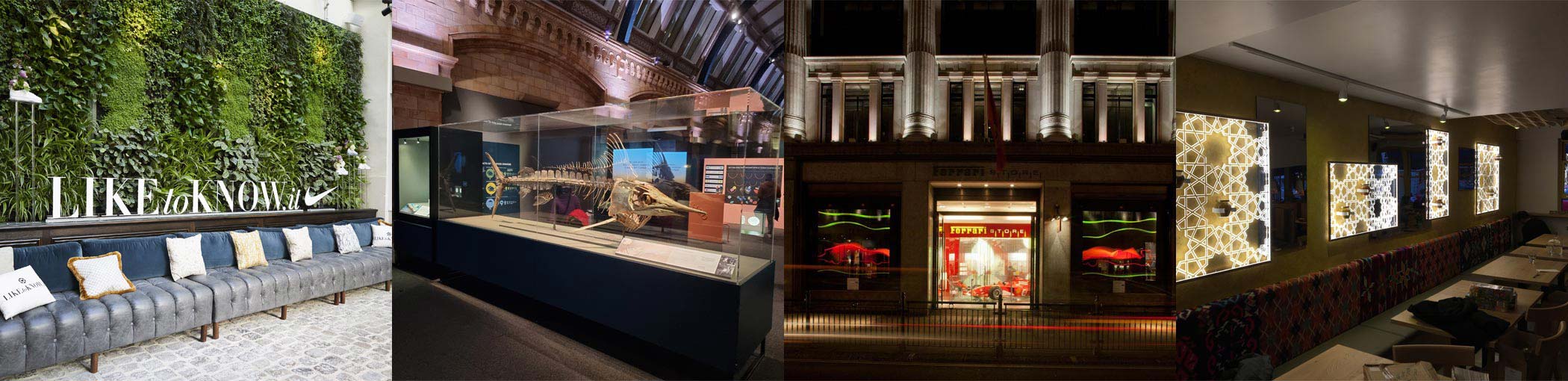
Acrylic fabrication is well-suited to this environment because it functions effectively in:
- Illuminated display systems
- Branded exhibition panels
- Suspended product housings
- Modular display sections
- Custom retail-style presentation areas
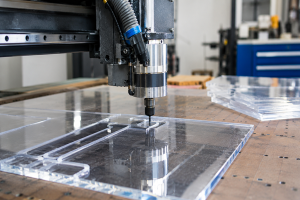
Precision CNC acrylic machining enables the accurate reproduction of revised components, ensuring quick access to replacement sections or modified display elements.
That consistency becomes particularly important when stands combine lighting integration, layered branding, and high-visibility product presentation.
Example accelerated exhibition workflow
When exhibition revisions happen late, production teams often need a streamlined workflow that allows fabrication and installation to continue simultaneously.
A rapid acrylic prototyping process may follow a sequence similar to this:
- Revised stand specifications or product dimensions are received
- CAD files are updated for the affected acrylic components
- CNC-cut acrylic display sections are manufactured
- Branding, engraving, or lighting integrations are applied
- Components are packaged and prepared for dispatch
- Installation teams fit revised sections during stand assembly
The ability to complete this sequence quickly can prevent wider delays affecting transport schedules, contractor coordination, and exhibition installation windows.
For exhibitors operating within tightly scheduled trade show environments, avoiding disruption often matters just as much as the fabrication itself.
A realistic last-minute exhibition scenario
Imagine a technology company preparing for a major exhibition in Germany.
The stand design has already been approved. Illuminated acrylic product housings are in production. Installation teams are booked. Shipping schedules are locked.
Then, four days before dispatch, the dimensions of the featured product change after final engineering approval.
The original display housings no longer fit correctly.
Without rapid fabrication capability, the exhibitor may face an expensive decision between compromising the stand presentation or delaying installation entirely.
Instead, revised acrylic prototypes can be designed, manufactured, and integrated within a compressed timeframe.
Monday:
Updated product dimensions are received.
Tuesday:
New CAD revisions are completed for the illuminated display sections.
Wednesday:
Replacement acrylic fabrication is produced and edge-finished.
Thursday:
Branding and lighting integrations are applied before dispatch.
Friday:
The revised exhibition stand is installed before the event opens.
This type of fast-turnaround workflow is one reason exhibition contractors increasingly work with acrylic fabrication specialists such as Denny Plastics when exhibition timelines tighten and visual presentation standards still need to remain high.
How rapid acrylic prototyping reduces wider project disruption
The biggest operational advantage is not always speed alone.
Often, the real benefit comes from limiting how far a late-stage issue spreads across the wider exhibition project.
Rapid acrylic fabrication can help:
- Avoid complete stand reconstruction
- Preserve existing modular structures
- Support phased exhibition updates
- Reduce transport disruption
- Minimise wasted display materials
- Accelerate branding revisions
- Support quicker installation scheduling
- Maintain presentation consistency across revised stand sections
Exhibitors attending multiple trade shows throughout the year, where they reuse, adapt, and reconfigure stand systems between events, find this increasingly valuable.
Instead of rebuilding entire exhibition environments repeatedly, brands can update specific acrylic elements while retaining larger structural components.
That approach improves both efficiency and flexibility.
Why exhibition flexibility is becoming commercially important
The exhibition industry itself is changing.
Trade shows now have the responsibility of simultaneously supporting product launches, media coverage, social content creation, investor engagement, live demonstrations, and customer interaction. Exhibition stands increasingly function as temporary branded environments rather than simple display spaces.
That shift places more pressure on adaptability.
Exhibitors often need stand systems capable of evolving quickly across:
- Changing campaigns
- Revised branding
- Updated product lines
- Varying venue layouts
- Regional exhibition differences
At the same time, businesses are under pressure to control costs, reduce material waste, and maximise reuse across exhibition schedules.
Rapid acrylic prototyping aligns with all of those pressures because it allows exhibition environments to evolve without requiring complete structural replacement every time a campaign changes.
For many brands, responsiveness is now part of the presentation itself.
A stand that adapts cleanly under pressure often reflects positively on the business behind it.
Why speed alone is no longer enough
Fast exhibition fabrication on its own does not solve much if the finished result looks rushed or inconsistent.
Modern exhibitors still expect:
- Clean edge finishing
- Accurate branding alignment
- lighting precision
- Visual consistency
- Premium presentation quality
This is where precision acrylic manufacturing becomes commercially important rather than purely functional.
The expectation at major exhibitions is no longer simply to “have a stand ready.”
The expectation is to deliver a polished environment that still reflects the brand properly even when timelines become compressed.
That combination of speed, adaptability, and visual quality is why rapid acrylic prototyping is becoming more central to exhibition stand production across the UK and wider European exhibition market.
As trade show timelines continue accelerating, exhibitors that can adapt quickly without compromising presentation standards are likely to remain in a stronger position when operational pressure inevitably appears.