SPEAK TO THE EXPERTS

  • phone-icon
  • 020 8964 9368

SEND US AN EMAIL

  • mail-icon
  • sales@dennyplastics.co.uk

Blog

Categories
blogpost

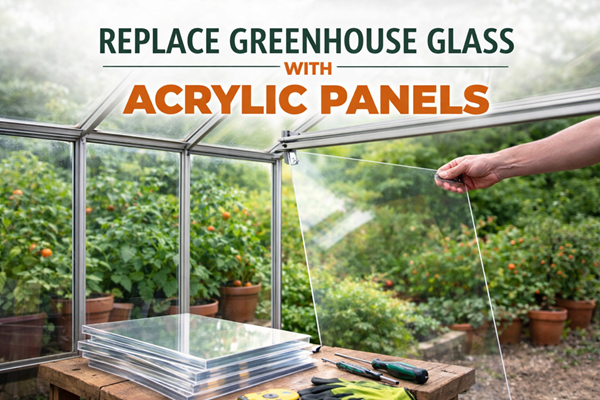
Replacement Greenhouse Glass Using Acrylic Sheets

Broken greenhouse glass is one of the most common repair issues faced by UK gardeners. Traditional horticultural glass is fragile and can easily shatter during storms, accidental impacts, or temperature changes. Replacing damaged panes with acrylic sheets has become a popular alternative because the material is lighter, stronger, and much safer to handle.

Acrylic panels allow gardeners to repair greenhouses quickly while maintaining the light conditions needed for healthy plant growth. Many suppliers now offer acrylic panels for greenhouse replacement in the UK that can be cut precisely to size for simple installation.

Why people replace greenhouse glass with acrylic panels

Glass has traditionally been used for greenhouse glazing because it provides excellent light transmission. However, it also has several disadvantages.

When glass breaks, it produces sharp fragments that can cause injury and damage plants inside the greenhouse. Acrylic sheets solve this problem by offering high impact resistance while still allowing large amounts of light to pass through.

Common advantages include:

  • Lighter weight than glass
  • Strong resistance to impact
  • Safer handling during installation
  • Reduced risk of shattering
  • Excellent light transmission

Acrylic sheets typically transmit around 90 percent of visible light, which is comparable to horticultural glass and suitable for most greenhouse environments.

Acrylic vs. polycarbonate for greenhouse panels

Both acrylic and polycarbonate sheets are used as greenhouse glass replacements. Each material offers slightly different benefits.

Acrylic panels provide excellent clarity and maintain strong resistance to weathering and UV exposure. They also tend to remain visually clear for long periods, making them a popular option for garden structures.

Polycarbonate sheets are stronger in terms of impact resistance and are often used in commercial greenhouses or areas exposed to high wind conditions.

For most domestic greenhouse repairs in the UK, acrylic sheets provide a good balance between strength, clarity, and affordability.

Quick answer: Can acrylic replace greenhouse glass?

Yes. Acrylic sheets are widely used to replace greenhouse glass because they are lighter, safer, and more impact resistant while still allowing high levels of sunlight to reach plants.

Most greenhouse panes that originally used 3 mm or 4 mm glass can be replaced with acrylic sheets of the same thickness. Panels are typically cut to size and installed using the existing greenhouse frame and glazing clips.

How to measure greenhouse panels correctly

Accurate measurement is important when ordering replacement panels for an acrylic greenhouse.

To measure correctly:

  1. Remove any remaining broken glass from the frame.
  2. Measure the width and height of the opening.
  3. Subtract around 2–3 mm from each dimension.

This small reduction allows space for expansion and ensures the acrylic panel fits easily into the frame without pressure.

It is also useful to check the thickness of the original greenhouse glass so the replacement sheet sits properly within the glazing system.

Choosing the correct acrylic sheet thickness

Acrylic greenhouse panels are available in several thickness options. The most common thicknesses used for greenhouse repairs are:

  • 3 mm acrylic sheet
  • 4 mm acrylic sheet
  • 5 mm acrylic sheet

Smaller greenhouse panes are usually suitable for 3 mm sheets, while larger panels may benefit from 4 mm or 5 mm acrylic for additional rigidity.

Choosing the correct thickness ensures the panel remains stable in windy conditions.

Installation tips for DIY greenhouse repairs

Installing acrylic greenhouse panels is typically a straightforward DIY project.

When fitting the sheets it is important to allow space for expansion because acrylic expands slightly in warm temperatures.

Practical installation tips include:

  • Avoid overtightening clips or fixings
  • Ensure a small gap around panel edges
  • Use rubber glazing strips where possible
  • Protect sheet edges from sharp metal frames

These simple precautions help prevent stress cracks and ensure the panels remain secure for many years.

Ordering acrylic greenhouse replacement panels in the UK

Many suppliers provide cut to size acrylic panels specifically designed for greenhouse repairs. Ordering panels pre-cut eliminates the need for specialist tools and simplifies installation.

When placing an order you should provide:

  • Panel width and height
  • Sheet thickness
  • Number of panels required
  • Delivery location

Most UK suppliers can cut acrylic sheets accurately and dispatch them quickly, allowing greenhouse repairs to be completed without long delays.

When acrylic panels are the best replacement solution

Acrylic greenhouse panels are especially suitable when broken glass needs replacing quickly or when safety is a concern.

They are commonly used when:

  • Glass panes have shattered
  • Children or pets use the garden
  • Greenhouses are exposed to strong winds
  • Lighter materials are preferred

In these situations, acrylic is a durable and practical alternative to traditional glass.

Conclusion

Replacing broken greenhouse glass with acrylic sheets is a practical upgrade that improves safety and durability. Acrylic panels are lighter, more impact resistant, and easier to install than glass while still allowing excellent light transmission.

For gardeners searching for acrylic greenhouse replacement panels in the UK, cut to size sheets offer a fast and effective solution for restoring greenhouse structures and protecting plants.

Categories
blogpost

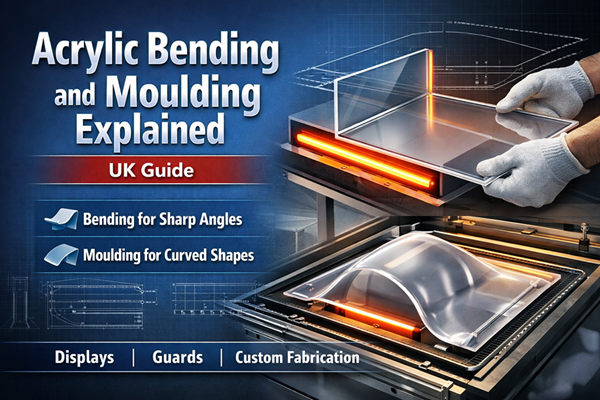
How Acrylic Bending and Moulding Works – What It Is and When to Choose It

Acrylic is one of the most versatile plastics available. You’ll see it everywhere, from retail displays and protective screens to signage and bespoke fabricated components. But acrylic isn’t just cut and used flat. Through bending and moulding, it can be shaped into strong, seamless forms that look clean, professional, and built to last.

If you’re considering acrylic fabrication for your next project, understanding how bending and moulding works will help you decide whether it’s the right solution, and when it offers clear advantages over alternatives.

What is acrylic bending?

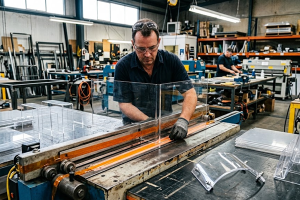
Acrylic bending is the process of heating a sheet of acrylic along a specific line until it becomes pliable. Once softened, the material is carefully bent to the desired angle and held in place while it cools and hardens.

This method is often called line bending or strip heating, and it allows fabricators to create precise angles without cutting and joining separate pieces.

How the process works:

  1. Heating – A controlled heat source warms a narrow section of the acrylic sheet.
  2. Softening – The acrylic becomes flexible at around 150–160°C.
  3. Forming – The softened section is bent to the required angle or shape.
  4. Cooling – The acrylic cools and retains the new form permanently.

Because the bend is formed from a single piece, the result is stronger, cleaner, and more visually appealing than glued joins.

What is acrylic moulding?

Acrylic moulding takes shaping a step further. Instead of bending along a straight line, the entire sheet is heated and formed over or into a mould to create more complex shapes.

This process is often referred to as thermoforming or vacuum forming, depending on the method used.

How moulding works:

  1. Heating the full sheet until it becomes flexible.
  2. Positioning over a mould that represents the final shape.
  3. Forming the acrylic using gravity, pressure, or vacuum.
  4. Cooling and trimming to achieve the finished component.

This allows for curved surfaces, contours, and three-dimensional forms that can’t be achieved through bending alone.

Key benefits of acrylic bending and moulding

These techniques offer several advantages over traditional fabrication methods.

1. Seamless, professional appearance

Because bends are formed from a single sheet, there are no visible joints, seams, or glue lines.

2. Excellent structural strength

A continuous piece of acrylic maintains its integrity better than bonded sections, reducing weak points.

3. Greater design flexibility

From simple right angles to complex curves, acrylic can be shaped to suit almost any design requirement.

4. Lightweight but durable

Acrylic is significantly lighter than glass, yet strong enough for demanding commercial and industrial use.

5. Cost-effective for custom work

Bending and moulding often reduce the need for multiple components, simplifying manufacturing and assembly.

When to choose acrylic bending

Acrylic bending is ideal when your project requires clean angles or structural forms made from flat sheet.

Common applications include:

  • Retail display stands
  • Protective machine guards
  • Point-of-sale units
  • Menu holders and leaflet displays
  • Equipment covers
  • Light diffusers and housings

If your design involves straight folds or angled shapes, bending is usually the most efficient and cost-effective option.

When to choose acrylic moulding

Moulding is the better choice when your design requires curves, contours, or complex shapes.

Typical uses include:

  • Protective covers with curved surfaces
  • Medical and laboratory equipment housings
  • Automotive components
  • Custom enclosures
  • Architectural features
  • Bespoke product displays

If your project can’t be achieved using flat sheets or straight bends, moulding opens up far greater possibilities.

Acrylic vs other materials

Many businesses consider glass, metal, or polycarbonate for similar applications. Acrylic often provides a better balance of performance and practicality.

Compared with glass:

  • Much lighter
  • More impact resistant
  • Easier to fabricate
  • Safer if damaged

Compared with metal:

  • Better visual clarity
  • Corrosion resistant
  • Lighter weight
  • More cost-effective for display applications

Precision matters in acrylic fabrication

The quality of acrylic bending and moulding depends heavily on the skill and equipment used. Poor temperature control or rushed handling can lead to stress marks, distortion, or weakened areas.

Professional fabrication ensures:

  • Accurate angles and dimensions
  • Smooth, bubble-free finishes
  • Long-term durability
  • Consistent quality across multiple components

This is especially important for commercial environments, where appearance and reliability directly affect brand perception and operational performance.

Is acrylic bending or moulding right for your project?

If your design requires:

  • Clean angles → Choose bending
  • Curves or complex forms → Choose moulding
  • Strong, seamless construction → Both methods excel
  • Professional visual finish → Acrylic is one of the best materials available

For retail, industrial, medical, or commercial applications, acrylic fabrication offers a flexible, durable, and visually impressive solution.

Working with experienced specialists like Denny Plastics ensures your acrylic components are manufactured precisely to specification, delivering both performance and presentation.