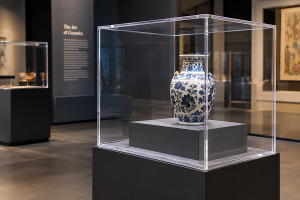


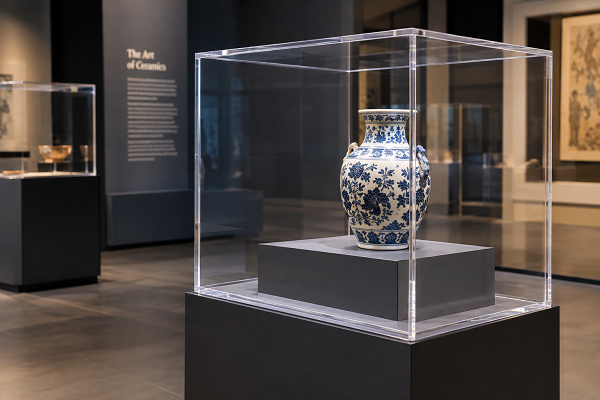
A museum display case needs to do more than provide a clear view of an object. It must present the collection to its best advantage, withstand regular use and provide an appropriate level of protection without distracting visitors from what they have come to see.
Achieving that balance depends on more than choosing a sheet of clear acrylic and assembling a box. The quality of the finished case is influenced by the material, the accuracy of the fabrication, the appearance of the joints and edges, and the way the case will be accessed and maintained.
For museums, galleries and exhibition designers commissioning bespoke showcases, understanding these details makes it easier to assess a manufacturer’s capabilities and specify a case that meets the needs of the collection.
Why the quality of acrylic fabrication matters
Acrylic is widely used for museum showcases because it combines excellent optical clarity with a relatively low weight and considerable flexibility in design. It can be cut, shaped, bonded and polished to create enclosures for objects of many different sizes and forms.
However, the finished result depends heavily on how the material is worked.
Poorly aligned panels, visible adhesive lines, rough edges or inaccurate dimensions can detract from the appearance of an otherwise carefully designed display. These imperfections become particularly noticeable in brightly lit galleries or when visitors view a case from several angles.
A well-fabricated showcase should look considered from every side, with the construction supporting the presentation rather than becoming a feature in its own right.
1. Optically clear joints and accurate panel alignment
The joints are among the most important details to examine when assessing an acrylic display case.
Where several panels meet, the quality of the bond affects both the structural integrity and the visual finish. Uneven edges, trapped air or poorly executed joints can interrupt the view through the case and make the finished product appear less refined.
Museum-grade fabrication aims to minimise these distractions. Accurately prepared edges and carefully controlled bonding techniques help create clean joints that allow the displayed object to remain the main focus.
Panel alignment matters just as much. Even small inaccuracies can become obvious across a large showcase, particularly where several cases need to sit alongside one another as part of a larger exhibition.
For institutions commissioning multiple units, consistent dimensions and repeatable manufacturing standards are therefore important considerations.
2. Polished edges that complement the display
The edges of an acrylic case can have a significant effect on its overall appearance.
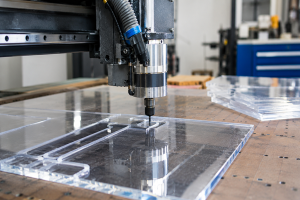
Depending on the design and material thickness, different polishing methods can produce different finishes. Flame polishing can create a smooth, glossy edge, while mechanical polishing techniques can be used where a particular level of clarity or finish is required.
The most appropriate method depends on the shape of the component, its thickness and the intended result. Not every edge should automatically be treated in the same way.
A well-finished edge should complement the rest of the case without introducing unnecessary visual distractions. This is especially important for large showcases, where exposed edges may be visible across several viewing angles.
We offer a range of polishing techniques as part of its bespoke acrylic and plastic fabrication services, allowing the finish to be matched to the requirements of the project.
3. Choosing the right acrylic for the object
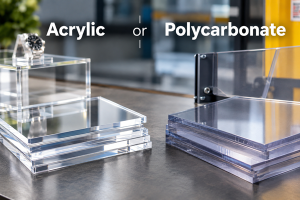
Clear acrylic is not a complete specification in itself. The material must be appropriate for the dimensions of the case, its intended use and the requirements of the collection.
Several factors should be considered before fabrication begins:
- Panel size and thickness: Larger panels may require greater thickness or additional design considerations to control deflection and maintain the intended shape.
- Optical quality: The material should provide the level of clarity needed for the objects and viewing conditions.
- Light exposure: Where collections contain light-sensitive materials, the case specification should account for the exhibition lighting and the object’s conservation requirements.
- Environmental conditions: Temperature, humidity and the surrounding environment can affect both the object and the materials used in the display.
- Handling and durability: The case should be suitable for its expected use, including cleaning, access and any planned exhibition changes.
Some collections require more specialist materials or environmental controls. Acrylic alone does not guarantee protection against ultraviolet radiation, humidity changes or harmful emissions. Where these risks are relevant, the museum or its conservation team should specify the necessary performance requirements before the case is manufactured.
Getting these decisions right at the outset helps avoid costly changes after production has started.
4. Access panels, lids and practical maintenance
A display case may look excellent when first installed, but it also needs to work for the people responsible for the collection.
Curators and technicians may need to install an object, adjust its position, carry out routine cleaning or change an exhibition. The access method should make these tasks practical without compromising the intended presentation or security of the display.
Depending on the application, a bespoke case may incorporate a removable top, a lift-off cover, a hinged section or another access arrangement. The appropriate solution depends on the size and weight of the object, the available working space and how frequently the case needs to be opened.
It is worth considering these requirements before the design is finalised. An opening that works for a small object may be impractical for a larger artefact, while a heavy or awkwardly positioned lid can complicate installation and routine maintenance.
Access arrangements should also be considered alongside the security requirements of the collection. Where locks or concealed fastenings are needed, these should form part of the original design rather than being added as an afterthought.
5. Designing the case around the object
A bespoke showcase should be designed around the item it will contain, rather than forcing the item to fit a standard enclosure.
Dimensions are only the starting point. The design may also need to accommodate a base, internal supports, mounting points, lighting or other display elements. The intended viewing angles and the available space within the gallery can influence the shape and proportions of the case.
For example, a small historical artefact may benefit from a compact enclosure that brings it into clear view, while a larger object may need a case that allows visitors to appreciate its shape from several directions.
The base and supporting structure also deserve attention. These components must be appropriate for the object’s weight and display requirements, while fitting the overall design.
Providing a manufacturer with accurate measurements, photographs and information about the object helps establish what is required. Where the design is complex, drawings or a detailed specification can reduce uncertainty before fabrication begins.
6. What to ask before commissioning a museum display case
Before placing an order, museums, galleries and exhibition designers should establish exactly what the manufacturer will deliver.
The following questions provide a useful starting point:
- What fabrication and finishing methods will be used? Ask how the panels, joints and exposed edges will be finished.
- Can the case be manufactured to bespoke dimensions? Confirm that the design can accommodate the object and the available installation space.
- How will the case be accessed? Discuss cleaning, object installation, exhibition changes and any security requirements.
- Can the manufacturer produce consistent units? This matters when an exhibition requires several cases with matching dimensions and finishes.
- What information is needed before production? Establish whether technical drawings, measurements, material specifications or other details are required.
- How will the finished case be transported and installed? Consider the dimensions, access routes and handling arrangements, particularly for large or complex showcases.
It is also important to distinguish the quality of the display case from the conservation performance of the complete installation. Museums with sensitive collections may need specialist advice on internal environmental conditions, material emissions, ultraviolet protection and security. These requirements should be agreed before manufacture.
Bespoke museum showcases from Denny Plastics
Every collection presents different challenges, from the dimensions of the object to the way it needs to be viewed and accessed. A bespoke acrylic showcase allows these requirements to be considered as part of the design and fabrication process.
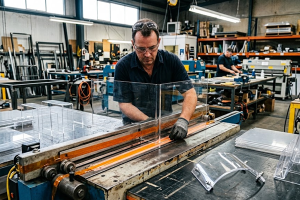
We manufacture custom Perspex showcases and display cases for museums, galleries and exhibitions. Its work includes museum-grade cases with carefully finished, optically clear joints, with showcases featured in institutions including Tate Modern, Tate Britain, the British Library, the V&A and the Science Museum.
The company also offers a range of bespoke fabrication and polishing techniques to achieve the required finish for different projects.
If you are planning a new exhibition or need a custom enclosure for a particular object, explore our Perspex showcases and display cases to find out more about its capabilities.
To discuss a project, get in touch with the team about your requirements.
Frequently asked questions
Is acrylic suitable for museum display cases?
Acrylic is suitable for many museum display applications because it offers excellent clarity, relatively low weight and flexibility in fabrication. The appropriate material and design depend on the object’s size, conservation needs, security requirements and display environment.
What makes a museum-grade acrylic case different from a standard display case?
The difference lies in the specification and quality of the finished product. Accurate fabrication, well-executed joints, polished edges, suitable access arrangements and appropriate material selection all contribute to a professional result. Some collections also require additional conservation or environmental controls.
Can acrylic display cases be made to custom dimensions?
Yes. Bespoke acrylic fabrication allows cases to be manufactured around specific objects, available spaces and exhibition designs. Providing accurate measurements and details of the intended use helps the manufacturer establish the most suitable construction.
How should an acrylic museum display case be cleaned?
Follow the manufacturer’s care instructions and use a cleaning product suitable for the specific acrylic material. A soft, clean cloth and an acrylic-compatible cleaner are generally preferable to abrasive products or solvents, which can scratch or damage the surface. The case should be handled carefully during cleaning, particularly around joints and access panels.
Should a museum specify conservation requirements before ordering a case?
Yes. Requirements relating to ultraviolet exposure, humidity, temperature, material emissions and security should be identified before fabrication begins. The case manufacturer can then work to the agreed specification, with conservation specialists advising on requirements for sensitive objects.