When a plastic component is being used for a commercial project, being a few millimetres out can be enough to cause problems.
A panel may need to fit into an existing frame. A machine guard may need to sit precisely around moving equipment. A retail display may need several identical components that all line up correctly during installation. If the dimensions are inconsistent, the result can be wasted material, additional labour and delays to the wider project.
This is where CNC routing becomes particularly valuable.
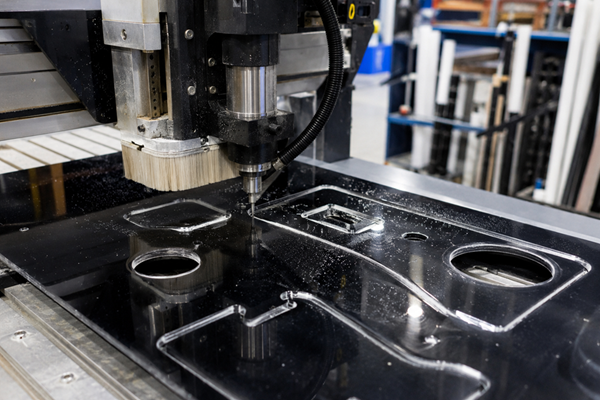
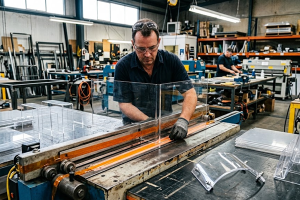
CNC routing uses computer-controlled machinery to cut, shape, drill, mill and profile materials according to a digital design. For commercial projects, it provides a combination of accuracy, repeatability and flexibility that is difficult to achieve consistently through manual cutting.
Denny Plastics provides CNC routing for a wide range of materials, including acrylic, polycarbonate, Perspex, Plexiglas, wood, Foamex and Dibond. Its 3-axis CNC router has a 3,000mm x 2,000mm bed and an 8-tool changer, allowing detailed and large-format work to be produced from a digital design.
What is CNC routing for plastics?
CNC stands for Computer Numerical Control. Rather than relying on an operator to manually guide a cutting tool, the machine follows instructions generated from a digital design.
A CAD drawing provides the dimensions and geometry of the component, while CAM software can translate this information into the instructions required by the CNC router. The machine then follows the programmed toolpath to produce the finished part.
This makes it possible to produce much more than a simple straight cut.
Depending on the design and material, CNC routing can be used for:
- Complex profiles and shapes
- Cut-outs and apertures
- Holes and drilled features
- Rebates and recesses
- Slots and channels
- Engraved details
- Bespoke panels
- Repeated components
- Large-format plastic parts
For businesses working from technical drawings or CAD files, this level of control can make the manufacturing process considerably more predictable.
Why does precision matter in commercial projects?
Precision is not simply about making a component look neat. In many commercial applications, the dimensions of a plastic component directly affect whether the finished product works as intended.
Consider a machine guard manufactured for a specific piece of equipment. If an opening is slightly too small, it may interfere with the machinery. If it is too large, the guard may not provide the required level of protection.
The same principle applies to a retail display. If several acrylic panels need to slot together, even small inconsistencies between components can make assembly difficult.
CNC routing helps address this by using the same digital instructions to produce each component. Denny Plastics notes that its CNC routing process can produce both one-off pieces and repeated identical production, while also helping to reduce waste, errors and production lead times.
For commercial buyers, that repeatability can be just as important as the initial accuracy.
Consistency when you need multiple components
Commercial projects often require more than one of something.
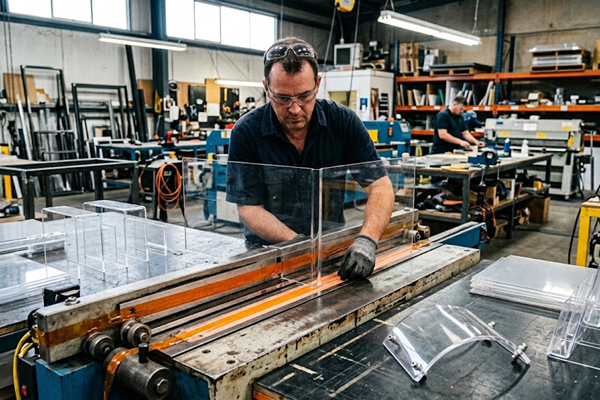
A shop-fitting company may need dozens of identical display components. An exhibition contractor could require multiple panels for a large stand. A manufacturer may need a batch of plastic components that will eventually form part of a larger product.
Producing each piece manually introduces opportunities for variation.
CNC routing allows the same digital design to be used repeatedly, helping maintain consistency throughout a production run. This means components can be manufactured to the same specification rather than relying on an operator to reproduce measurements by hand each time.
That becomes particularly useful when parts need to fit together during assembly.
It can also simplify future orders. Once the design and machining requirements have been established, the same specifications can potentially be used when additional components are required.
CNC routing can reduce material waste
Material waste is an important consideration for any commercial project, particularly when working with higher-value plastics or ordering large quantities.
CNC routing allows the cutting process to be planned digitally before the material reaches the machine. Components can be positioned efficiently on the sheet, while the toolpath can be programmed around the required shapes.
Better planning means less unnecessary cutting and fewer avoidable mistakes.
For a one-off component, the difference may be relatively small. Across hundreds of parts, however, reducing material waste can make a noticeable difference to overall project costs.
It also means businesses are not paying for additional material simply because several manually cut pieces were unusable.
A faster route from design to finished component
Time is another major consideration for commercial projects.
A delay in one part of a project can have a knock-on effect elsewhere. If a fabricated component is late, installation may have to be rearranged. If a part does not fit correctly, it may need to be remade before the project can continue.
CNC routing helps create a more controlled production process because the machine works directly from the programmed design.
Once the cutting information has been prepared, the same instructions can be used to produce additional components without having to recreate the measurements manually.
Denny Plastics also has a 3,000mm x 2,000mm CNC router, making the process suitable for larger sheets as well as smaller bespoke components.
For contractors, designers and manufacturers working to deadlines, that flexibility can be valuable.
Which plastics can be CNC routed?
The material needs to be considered alongside the design. Different plastics have different characteristics, and the machining process needs to be appropriate for the material being used.
Denny Plastics’ CNC routing service can work with a range of materials, including:
Acrylic and Perspex
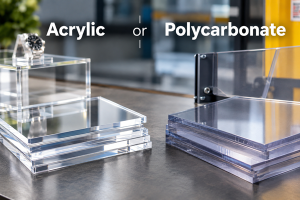
Acrylic, including Perspex and Plexiglas, is widely used where appearance matters alongside functionality.
It is particularly suited to applications such as displays, signage, furniture, exhibition components and architectural features. CNC routing can create custom profiles and apertures that would be difficult to achieve with a straightforward sheet cut.
Polycarbonate
Polycarbonate is valued for its toughness and impact resistance, making it useful for applications where durability is important.
CNC routing can be used to create bespoke panels, guards, covers and other components from polycarbonate sheet.
Foamex
Foamex is a lightweight material commonly associated with signage, displays and commercial graphics.
CNC routing allows it to be shaped into bespoke profiles and larger components according to the requirements of the project.
Dibond
Dibond and similar composite sheet materials can be machined for applications where a rigid, lightweight panel is required.
Wood and other sheet materials
CNC routing is not limited to plastics. Denny Plastics also uses its CNC router for wood and foam board, providing additional flexibility when a project involves several different materials.
The important point is that material selection should be based on the finished application’s requirements rather than simply choosing whichever material is easiest to machine.
Which industries use CNC routed plastic components?
CNC routing is useful wherever a business needs accurately manufactured components rather than standard off-the-shelf sheets.
Retail and shop fitting
Retail environments often require bespoke displays, shelving components, signage, product stands and protective panels.
Because every shop or commercial space can have different dimensions, bespoke CNC routed components can be manufactured to suit the individual installation.
Exhibition and events
Exhibition stands are often designed around tight deadlines and specific floor plans.
CNC routing can produce accurately sized panels, branding components, display structures and other bespoke parts that need to be assembled quickly on site.
Manufacturing and engineering
Manufacturers may require plastic guards, covers, panels, fixtures and components as part of a larger piece of equipment.
Here, dimensional accuracy is particularly important because the plastic component may need to interface with other manufactured parts.
Commercial interiors
Architects, designers and contractors can use CNC routed plastics for bespoke interior features, wall panels, screens, furniture components and decorative installations.
The ability to produce unusual shapes from sheet material gives designers more freedom than standard rectangular panels.
Signage and display
Businesses frequently require signs and displays in specific shapes and sizes rather than standard formats.
CNC routing can produce lettering, panels, cut-outs and bespoke profiles from materials such as acrylic and Dibond.
Film, television and creative production
Set builders, production companies and creative teams often need unusual components manufactured to precise dimensions and within tight timescales.
CNC routing provides the flexibility to turn a digital design into a physical component without relying entirely on manual fabrication.
Denny Plastics has experience working with a broad range of commercial sectors, including caterers, event organisers, shop fitters, art and design installers, television production companies and exhibition stand manufacturers.
CNC routing is not just about cutting a shape
One of the common misconceptions about CNC routing is that it is simply a more accurate version of cutting a sheet.
In reality, the process can involve several machining operations within the same project.
A component could require an external profile, several internal apertures, drilled holes, recessed areas and engraved details. CNC machining allows these features to be incorporated into the digital design and produced as part of a controlled manufacturing process.
That can reduce the need for multiple separate operations.
For commercial projects, fewer production stages can mean fewer opportunities for measurement errors and less time spent moving components between different processes.
What should you provide when ordering CNC routed plastics?
The more information available at the quotation and design stage, the easier it is for a fabricator to understand what the finished component needs to achieve.
Where possible, commercial customers should provide:
- A CAD drawing or suitable digital design
- Exact dimensions
- Material preference
- Required material thickness
- Quantity required
- Details of holes, cut-outs or recesses
- Required edge finish
- Intended application
- Installation requirements
- Required delivery date
If you do not know which plastic or thickness is appropriate, it is worth discussing the application with the fabricator before placing an order.
The cheapest material is not necessarily the most cost-effective choice if it does not perform properly once installed.
Likewise, specifying unnecessarily thick or expensive material can increase project costs without providing any practical benefit.
When is CNC routing the right choice?
CNC routing is particularly useful when a project requires accuracy, repeatability, complex shapes or bespoke dimensions.
It can be an excellent option when you need:
- A component manufactured from a digital design
- Multiple identical plastic parts
- Large-format panels with detailed profiles
- Precise holes and cut-outs
- Bespoke commercial displays
- Machine guards and protective components
- Exhibition and retail components
- Prototypes that may later become production parts
It may not always be the best manufacturing process for every requirement. Laser cutting, saw cutting, bending, moulding or another fabrication technique may be more appropriate depending on the material, thickness, geometry and finish required.
A good fabrication company should be able to advise on this rather than simply recommending the same process for every project.
Getting the right result from the start
For commercial projects, precision has a direct effect on cost, installation and the finished appearance.
A component that fits first time saves more than the cost of remaking it. Consistent production reduces the risk of assembly problems. Efficient material use can reduce waste. Accurate digital manufacturing also gives designers and engineers greater freedom to create components around the actual requirements of a project.
That is why CNC routing has become such a useful process for commercial plastic fabrication.
Denny Plastics’ CNC routing service combines computer-controlled machining with a 3,000mm x 2,000mm working area, an 8-tool changer and the ability to work with materials including acrylic, polycarbonate, Perspex, Plexiglas, Foamex and Dibond.
If you have a CAD drawing, production requirement or simply an idea for a bespoke plastic component, the best starting point is to discuss the application, material and dimensions before production begins.
For commercial CNC routing requirements, speak to us about your project and find out how its CNC routing service can turn your design into an accurate, repeatable finished component.