SPEAK TO THE EXPERTS

  • phone-icon
  • 020 8964 9368

SEND US AN EMAIL

  • mail-icon
  • sales@dennyplastics.co.uk

Blog

Categories
blogpost

What is the CNC routing process?

Have you ever admired the intricately carved wooden sign hanging outside your favourite shop or marvelled at the smooth, precise edges of a custom acrylic display? Chances are, these creations were born in the fascinating world of CNC routing. But what exactly is this process, and how does it transform raw materials into stunning masterpieces?

Unveiling the Acronym

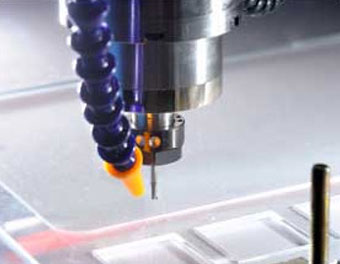
CNC stands for Computer Numerical Control, essentially meaning the machine is guided by pre-programmed instructions. In the case of CNC routing, this translates to a computer controlling the movement of a cutting tool across a fixed piece of material (the workpiece).

The Dance of Machine and Material

The core steps of the CNC routing process are:

  1. Design and Programming: Your vision comes to life in a digital design created with CAD (Computer-Aided Design) software. This design is then translated into G-code, a set of instructions for the CNC machine. Imagine it as a detailed recipe for the machine to follow.
  2. Material and Fixture: Securely clamp the chosen material (wood, plastic, metal, etc.) onto the CNC router’s bed using fixtures. These hold the material firmly in place throughout the cutting process.
  3. Tool Selection: Choosing the right tool is crucial. Different bits come in various shapes and sizes to handle specific tasks, like drilling, carving, or grooving.
  4. The Cutting Ballet: This is where the magic happens! The CNC machine, guided by the G-code program, meticulously moves the chosen tool along the designated path on the workpiece. Shavings dance in the air as the material takes shape, revealing your design with astonishing precision.
  5. Finishing Touches: Once the programme is complete, the finished product emerges. Depending on the material and desired outcome, sanding, polishing, or additional finishing steps might be required.

Beyond the Basics

The beauty of CNC routing lies in its versatility. Here are some additional aspects to explore:

  • Multi-axis Machining: Most CNC routers have three axes (X, Y, and Z), allowing for cuts in various directions and creating 3D forms.
  • Tool Changers: Some machines boast automatic tool changers, enabling them to handle complex projects requiring multiple tools without manual intervention.
  • Advanced Techniques: Intricate inlays, intricate patterns, and even 3D sculpting are all within the realm of possibility with advanced CNC techniques.

The Appeal of the Router

So, why choose CNC routing over traditional cutting methods? Here are some compelling reasons:

  • Precision and Repeatability: CNC machines eliminate human error, ensuring consistent, identical cuts every time.
  • Speed and Efficiency: Automation significantly reduces production time, making it ideal for large or repetitive projects.
  • Complexity and Versatility: From simple shapes to intricate designs, CNC routers can handle a vast range of materials and project requirements.
  • Minimal Waste: Precise cuts minimise material waste, making them a more sustainable option compared to manual methods.

Whether you’re a seasoned maker or a curious newcomer, delving into the world of CNC routing unlocks a universe of creative possibilities. It’s a process that combines technology, artistry, and meticulous planning to transform raw materials into objects of beauty and function. So, the next time you encounter a meticulously crafted piece, remember the intricate dance of machine and tool that brought it to life through the magic of CNC routing.

Now it’s your turn! Share your thoughts on CNC routing in the comments below. Have you ever used a CNC router before? What projects would you love to create with this incredible technology?Remember: This blog post is for informational purposes only and does not constitute professional advice. Always consult with a qualified professional before using or operating any machinery.
Categories
blogpost

Acrylic Fabrication: An Introduction

If you take a moment to glance around in your daily life, you will most likely see several objects that are made of plastic. This tough and long-lasting substance has transformed the world in so many ways, and the technique of acrylic fabrication is now utilised to make an almost unlimited number of diverse items, from the plastic bottle you drank from for breakfast to the keyboard you’re typing on right now. Although it is a technical phrase, acrylic fabrication is a rather straightforward procedure that can be used to manufacture almost anything.

What exactly is acrylic fabrication?

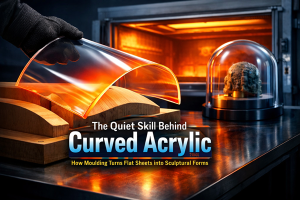
The fabrication of acrylic is extremely similar to the fabrication of metal. It entails heating a sheet of acrylic and converting it into a whole other shape or form. Acrylic is a thermoplastic, and when homogeneous heat is applied to its surface, it softens and becomes pliable. It will eventually melt into a molten liquid, which may then be poured into a mould of your choice. As it cools, the molten acrylic will go into all of the nooks and crannies of the mould, essentially adopting its shape and size and settling into place.

Acrylic fabrication requires a mix of specialist knowledge and modern technology, and the process frequently comprises a wide variety of technical activities such as compounding, extrusion, welding, lamination, and shaping. Different tools may be used to achieve different results, and a company’s capabilities in this sort of plastic manufacturing are limited only by its equipment and the amount of expertise and experience displayed by its team.

What are the primary benefits of acrylic?

Acrylic is appropriate for a wide range of everyday applications and is frequently used as a cost-effective alternative to glass. It has the same clear, translucent aspect as the original, but it is considerably lighter and easier to construct and move. The second apparent benefit of this robust and durable material is its safety, as it has outstanding impact-resistant characteristics and is exceedingly difficult to break or shatter in specific thicknesses. Acrylic is also incredibly adaptable. It can be moulded into almost any form or size you could possibly desire or need, and it can then be personalised to your satisfaction. Colours, lights, patterns, shapes, or odd effects are all options. The possibilities are endless when it comes to the acrylic production process.

Denny Plastics manufactures acrylics

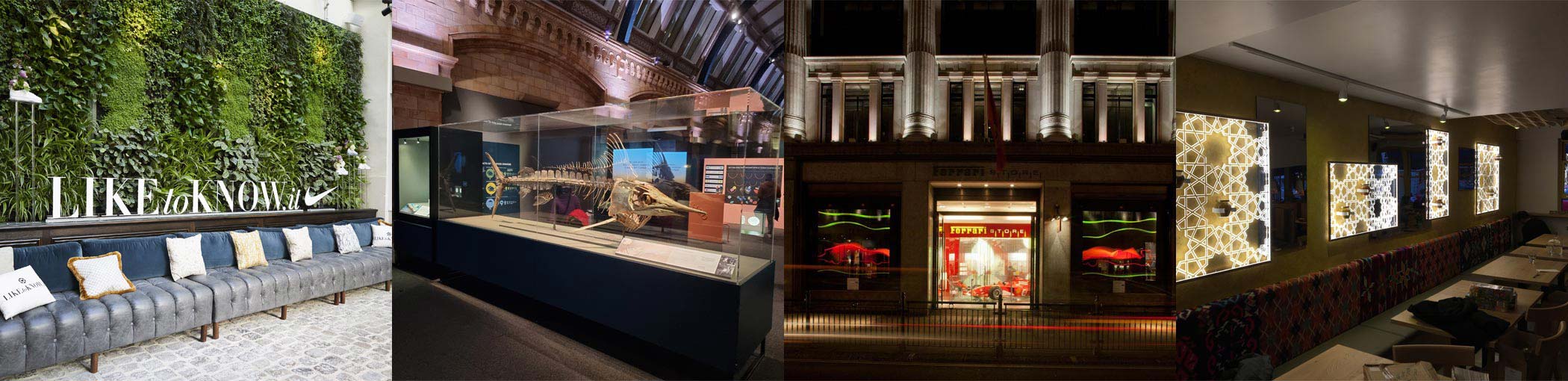
It’s safe to say that acrylic plastic fabrication is our specialisation at Denny Plastics. Nothing makes us happier than taking someone’s concept, making it a reality, and then witnessing the final acrylic product depart our facility. We can handle everything from tiny bespoke goods to complicated acrylic designs by utilising modern technology and equipment, as well as professional plastic fabrication processes, and we have worked on a wide range of fabrication projects throughout the years.

Denny Plastics can meet all of your needs. We will constantly consider your requirements and turn them into a finished product that you will be pleased with. We are convinced that we can produce your ideal acrylic plastic design based on our experience and industry knowledge.

Denny Plastics is one of the UK’s top acrylic fabrication experts, and we are quite proud of both our exceptional knowledge and our inventive nature. Our plant is outfitted with cutting-edge machinery such as huge ovens, acrylic dome blowers, and drape-formers, and we can undertake both standard and specialised acrylic fabrication processes such as vacuum forming and CNC machining. We constantly utilise the greatest materials and techniques to provide the best outcomes.

Contact the acrylic fabrication experts right away!

If you have any questions concerning acrylic fabrication or the acrylic fabrication services offered by Denny Plastics, please do not hesitate to contact us. Perhaps you have a question regarding the acrylic manufacturing process, or perhaps you’re ready to obtain an estimate or make an order. We’re always available and delighted to assist you with your inquiries.